Made-to-measure corner wardrobes in Benahavís
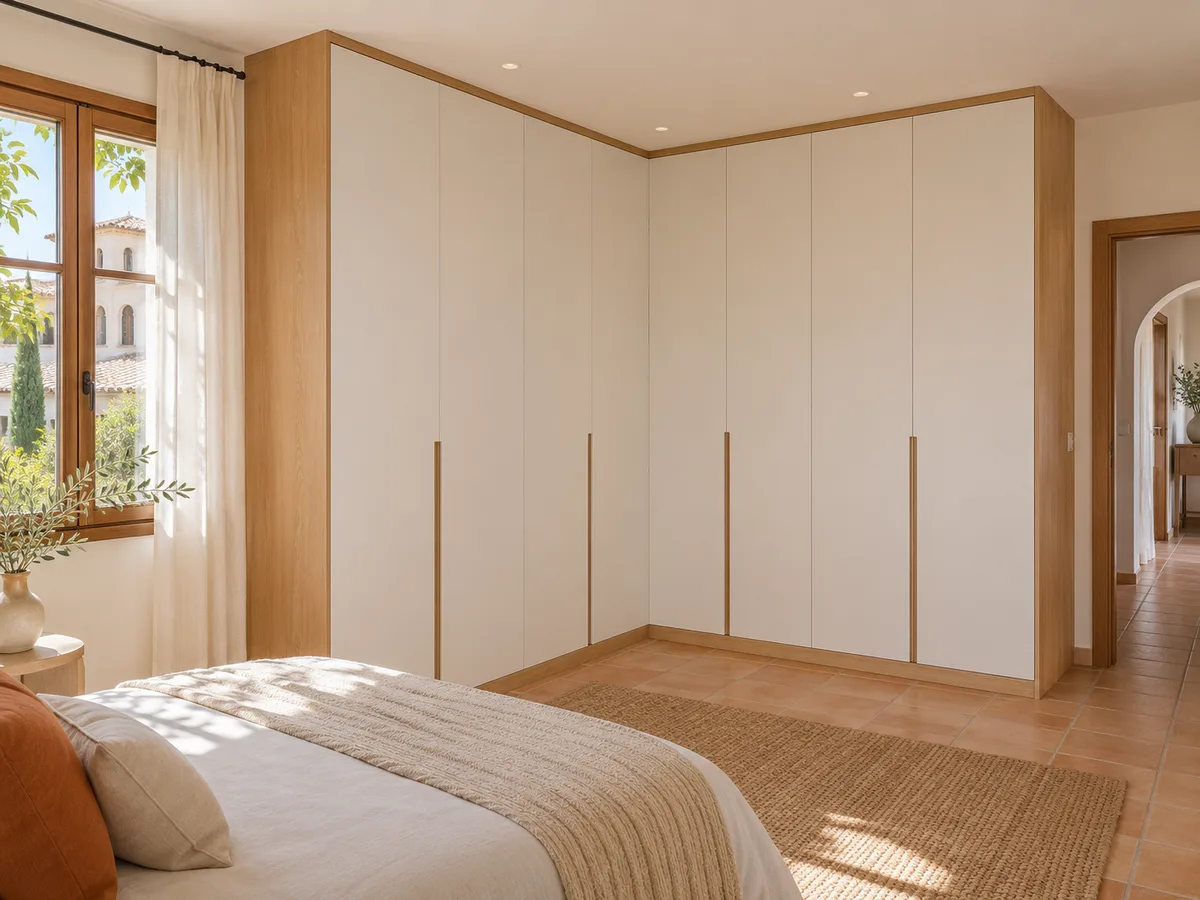
The corner of a bedroom is where the most wall space is wasted, and it is also the hardest to use well without creating areas you can't reach. A made-to-measure corner wardrobe in Benahavís turns that meeting of two walls into useful storage: you decide whether the wardrobe is a single L-shaped unit or two sections that meet, how you reach the back of the corner, and which doors keep the way clear.
Shape your next wardrobe.
Try out the measurements, plan the interior layout and choose your finishes. See your idea take shape and share it with us so we can prepare your quote.
Send us your configuration with your measurements and we'll give you a guide price within 24 hours, free of charge. The measuring visit at your home comes afterwards.
What we can solve with a corner wardrobe
A corner wardrobe makes sense when you have two adjoining free walls and little chance of fitting a straight unit. It gives you a long front spread across two sides, so there is room for more hanging rails and shelves than in a unit that only takes up one wall.
It also works for awkward corners: a leftover gap behind a door, an angle close to a window or a wall that ends in a pillar. The design starts from the measurement of each side, the real angle, which is not always 90 degrees, and what you need to store. If the corner is in a Benahavís bedroom with high ceilings, it can also go all the way up and offer a great deal of capacity.
L-shaped wardrobe, corner module and continuous fronts
There are two ways to approach the corner. The L-shaped wardrobe is a single unit that turns the corner, with a continuous front on each wall and an interior that connects both arms. Corner wardrobes made up of two sections that meet in the corner, on the other hand, are easier to transport and install, and let you treat each side with different doors.
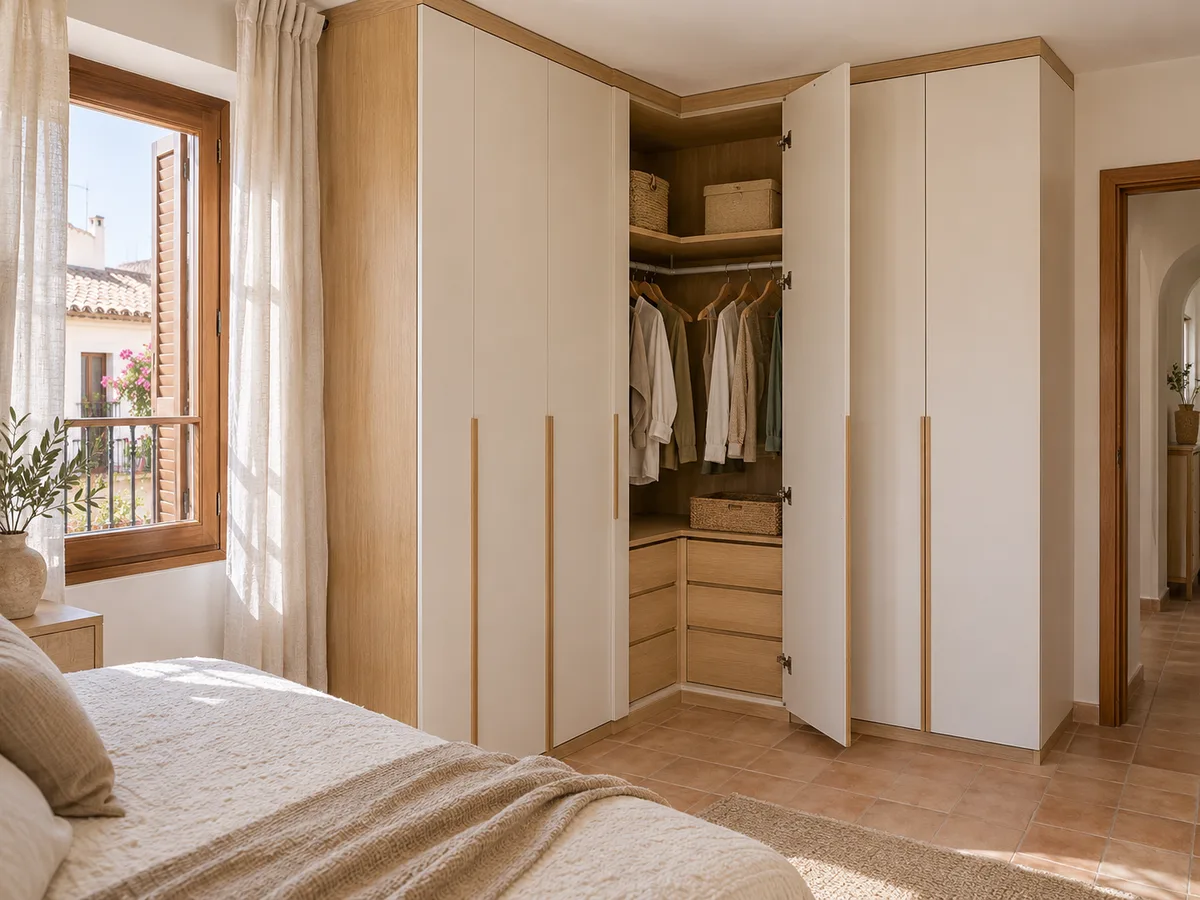
The corner module is the piece that joins the two sections. It can be a small unit with its own door, a blind section or a module with curved shelves that makes access easier. The choice depends on how much depth you want in the corner and whether you prefer a continuous line or two fronts with clear joins.
How to reach the back without creating unusable areas
The big problem with a corner is the depth: it is hard to reach what sits in the corner. There are several answers. A rotating rail lets you hang clothes and bring them towards you when you open the doors. L-shaped shelves or pull-out trays let you draw them out and see everything inside. And modules with an angled door open up the whole corner.
If you want to avoid mechanisms, another solution is to treat the corner as an occasional-use zone: you keep suitcases, off-season clothes or boxes you don't touch every day there, and the rest of your everyday storage is spread across the arms of the L-shaped wardrobe, where everything is within easy reach.
Have you already measured the space?
Send us a photo and the approximate measurements on WhatsApp and we'll give you some initial guidance.
Doors and drawers that don't get in each other's way
- 01
In the corner, two doors opening in perpendicular directions can collide. You avoid this by placing the hinges on opposite sides, leaving a fixed section between them or fitting a door that opens against the side wall. If you use hinged doors on both arms, the swing is drawn to scale.
- 02
Sliding doors work well on each arm, although in the corner they need a fixed closing panel. Drawers are placed a sensible distance from the corner, so that the front of one does not block the one on the neighbouring arm. It's the kind of detail that decides whether the wardrobe is easy to use or becomes a collection of knocks and scrapes.
Adapting to walls, windows and walkways
A corner is rarely clean. It often has a window right up against one of the walls, a radiator, a door frame or a switch. The design has to set the corner wardrobe back to leave the window handle free, cut the front off before the door frame or leave a narrow gap at the side.
When the opening reaches right up to the corner, a shorter arm is drawn and compensated for with extra height or depth on the other. In these cases an L-shaped wardrobe with an asymmetric arm is usually better than forcing a symmetry that doesn't exist, and the result respects the light coming in and the way through to the bed.
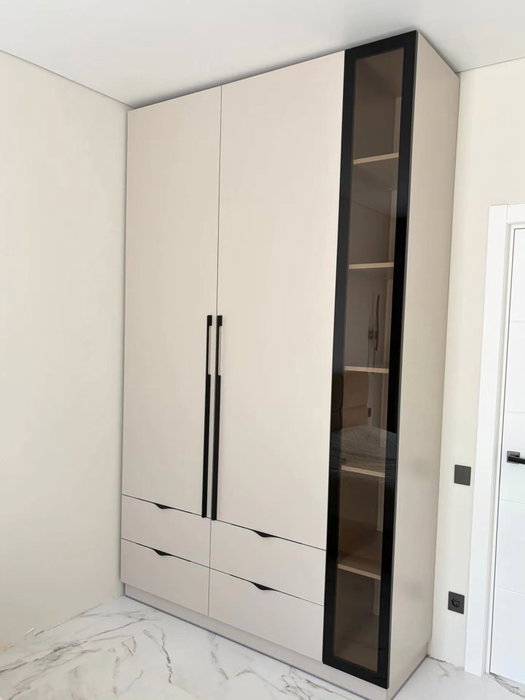
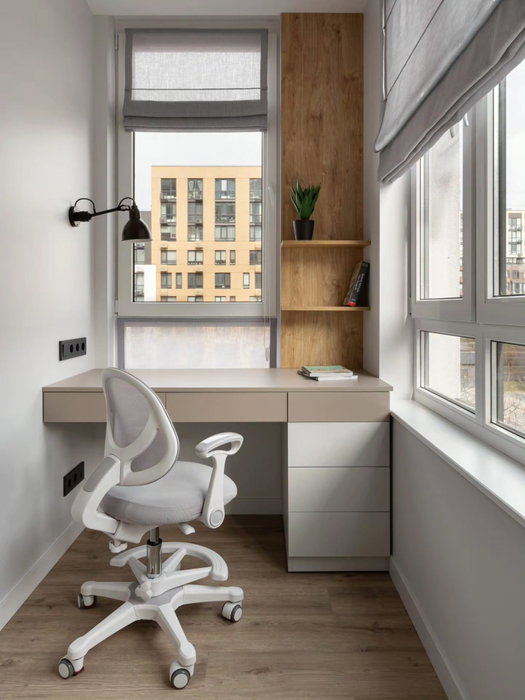
Latest work by SI, ARMARIO
@si.armario
Made-to-measure wardrobes and walk-in wardrobes
Latest posts
When the corner calls for a walk-in wardrobe rather than a wardrobe
A corner wardrobe is a closed piece of furniture that you use from the front; if what you need is to be able to walk in, hang clothes on both sides and get dressed inside, that is a different project. The corner serves as the starting point for an L-shaped walk-in wardrobe, which is planned as an area with its own rails and shelves and is covered among our walk-in wardrobe solutions.
The practical dividing line is the available depth and how you will use it. With less than a metre and a half free on each wall, a well-designed L-shaped wardrobe is the sensible choice. With room to walk around, the corner wardrobe stops being the best idea. In Benahavís, where some homes have very large bedrooms with generous corners, it's worth deciding this at the start.
Ask us to measure up in Benahavís
- 01You leave us your name and your area.
- 02We message you on WhatsApp to agree a day.
- 03The measuring visit costs €50 and is free if you place an order.
Measuring up a corner
A corner needs more data than a straight run. You have to take the length of each wall at several heights, check with a square or plumb line whether the angle is a right angle, and note any projection that reduces the opening, such as skirting boards, ducts or pipes.
A corner rarely makes exactly 90 degrees, so we measure the gap left at the join and allow for an adjustment profile. With your approximate dimensions, the configurator prepares a design and the team gives you an indicative estimate within 24 hours, at no cost. The visit to take the final measurements costs €50 if you don't order the wardrobe and is free if you do.
What to check in the design before we build
- 01
Before manufacturing, it's worth checking three things. First, that you can reach both the long and the short arm without climbing on a chair, by checking the height of the rails. Second, that each door has its own clear swing. And third, that the way the corner is handled, whether rotating, pull-out or fixed, suits how you will use it.
- 02
We also confirm the finish and the direction of the grain, so that the two walls look like a single piece of furniture as you enter the room. Manufacturing takes around 2–3 weeks on average and the installation is arranged separately; in prices you will find the factors that affect the final cost.
Enquiry
Tell us about your project in Benahavís
- 1We read your message and look at your photos.
- 2We reply on WhatsApp with a first figure.
- 3We measure up and prepare the final quote. The measuring visit costs €50 if you don't go ahead with the order and is free if you do.
We don't cut a single board until you've approved the design and the price.
Questions
Frequently asked questions about wardrobes in Benahavís
After installation: warranty and care for your wardrobe.
Does a corner wardrobe always make better use of space?
Not always, but it almost always gains more usable front than a straight unit, because it uses two walls. If the corner is badly resolved, part of the depth is lost, which is why it is designed with a suitable access system.
Where do I hang my clothes if I can't reach the corner?
Clothes are hung on the two arms, where the rail is accessible, and the corner is kept for shelves, boxes or a rotating rail. A straight rail pushed right into the back of the corner leaves clothes out of reach.
Can sliding and hinged doors be combined?
Yes. It is common to use sliding doors on one arm, where there is little space in front, and hinged doors on the other. What matters is that the doors don't collide at the join, which is why a fixed panel or an intermediate section is left.
L-shaped wardrobe or L-shaped walk-in wardrobe: what's the difference?
The L-shaped wardrobe is a closed piece of furniture with doors, against two walls. The L-shaped walk-in wardrobe is an open area or a room you walk into to get dressed. The first is used from the front; the second you move around in.
Can a corner wardrobe go next to a window?
Yes, if the arm is shortened or set back so that the window can still open. The sash and the handle are measured, and the wardrobe is adjusted to that limit.
Shall we talk about your project?
Send us a photo of the space and some approximate measurements on WhatsApp: we'll give you some initial guidance and arrange the measuring visit.